When buying a house in Bulgaria, it is important to look beyond the size of the property and the outdoor space. You also need to understand how the land is owned and exactly what is included in the purchase.
Two houses that look very similar can have quite different ownership structures. One may come with its own separate plot of land, while another may include a share in a larger common plot, with the garden area around the house allocated only for the owner’s exclusive use.
These differences are not always obvious during a viewing, but they can be important for the future owner.
Detached House on Its Own Plot
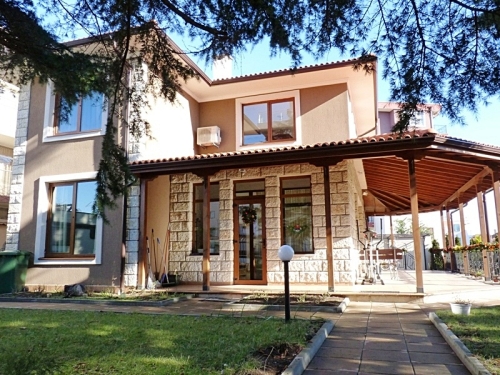
In the traditional arrangement, the buyer acquires a detached house together with a separate plot of land. Even within this category, however, properties can differ significantly.
Older houses, including renovated or extended properties, may have garages, summer kitchens, storage buildings, covered areas or other additions built at different times. It is therefore important to compare what physically exists on the property with the ownership documents and cadastral records. Inherited properties may also require confirmation of all persons who hold rights to the property and need to take part in the sale.
New houses built as investment projects for resale are usually part of planned developments. The individual plots in such projects are often more compact because the available land has been divided between several homes.
For this reason, buyers should compare not only the size of the house and the amount of outdoor space, but also what land is actually being purchased with the property and how ownership of that land is structured.
House or Townhouse in a Gated Development: Who Owns the Land?
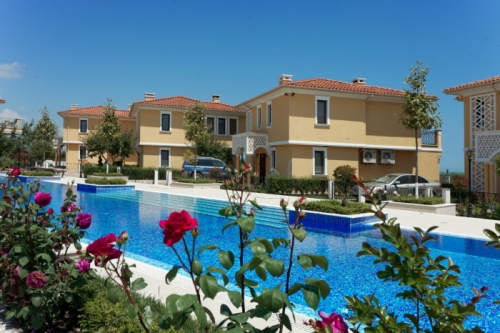
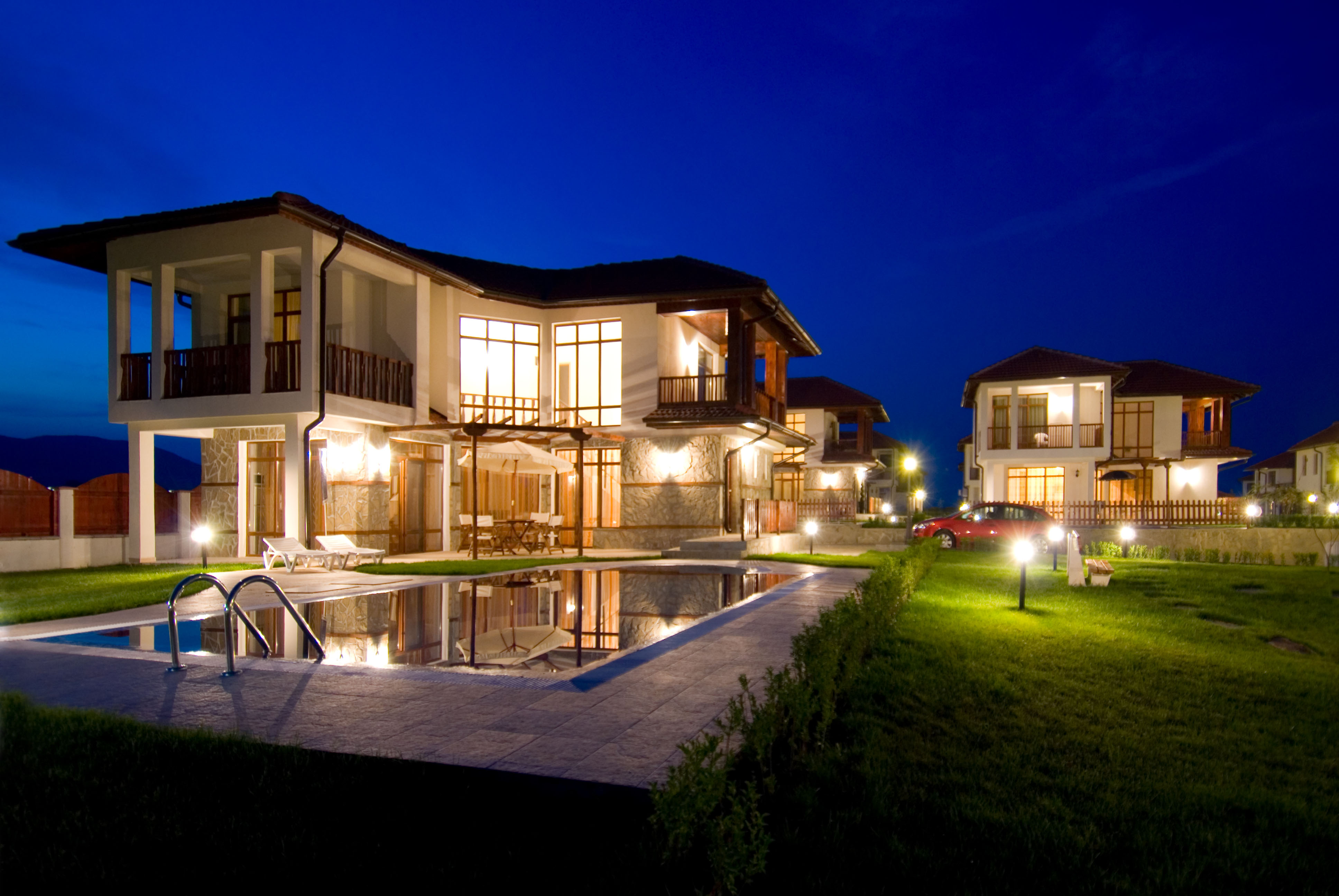
In gated developments of houses, villas and townhouses, the land can be organised in several different ways.
In some developments, each house has its own separate plot. In others, all of the houses are built on one larger plot and each owner acquires an undivided share of the common land.
A specific garden area may still be fenced and used exclusively by the owner of one house. This does not necessarily mean that the garden itself is a separate privately owned plot.
For example, a property advertised with a 300 sq.m garden may come with a separate 300 sq.m plot, or the owner may acquire a share of a larger plot while having the exclusive use of a defined area around the house.
The same principle applies to townhouses. A private entrance, garden and parking space do not automatically mean that the land beneath and around the property is individually owned.
In a gated development or gated community, it is also important to understand how internal roads, parking areas, landscaped spaces, swimming pools and other shared facilities are owned and managed. They may belong jointly to the homeowners, form part of shared ownership, or remain under the ownership of the developer or another entity with defined rights of use.
Buyers should also establish who manages the development, how the shared areas are maintained and whether there is an annual maintenance fee.
A Private Garden Does Not Always Mean a Private Plot
A house may have a fully fenced garden used only by its owner, while the land itself remains part of a larger jointly owned plot.
This is why it is important to distinguish between the outdoor area you are entitled to use and the land you actually own.
For a buyer, that distinction can be more important than the number of square metres stated in the property listing.
Location, Infrastructure and Property Maintenance
When choosing a house, location is not only about the distance to the sea or the nearest town. It is also important to understand what infrastructure actually serves the property.
A house within a town or village, a property in a villa zone, or a home within a gated residential development can offer very different conditions in terms of year-round access, water supply, sewerage, road maintenance and shared infrastructure.
In a managed development, some of these services are usually organised collectively. With an independent house, more responsibility for the property and its surroundings may remain with the owner.
This is particularly important for buyers who do not intend to live in the property all year round. If you live abroad or use your Bulgarian home only during certain periods, it is worth considering who will look after the house, garden and routine maintenance while you are away.
The right choice therefore depends not only on the house itself, but also on whether the location and maintenance arrangements suit the way you intend to use the property.
What Should Be Clear Before You Buy
Once a specific property has been selected, the next step is to establish exactly what is being sold and how the ownership is structured.
The ownership documents, registered rights and encumbrances, cadastral information, the house itself, any additional buildings and the land should be checked. For properties within a development, the rights relating to shared land and common facilities should also be clarified.
Where the ownership structure is more complex, the buyer should understand exactly what will appear in the title deed: a separate plot of land, an undivided share of common land, rights relating to shared areas or another ownership arrangement.
The legal status and designated use of land, as well as documents relating to the commissioning of buildings, have their own specific rules and are covered separately in the relevant Royal Homes information guides.
Buying a House as a Foreign National
For a foreign buyer, the house and the land should be considered separately.
The rules governing the acquisition of land in Bulgaria can depend on the buyer’s nationality and on the type of land involved. For this reason, there is no single ownership structure that applies to every international buyer.
The appropriate way to acquire the property should therefore be considered in relation to the specific buyer and the specific house and land being purchased.
How We Check a Property Once You Decide to Proceed
When a house is first offered for sale, the main information about the property is usually available, but the complete set of documents may not yet have been collected.
A detailed review begins once the buyer has selected a specific property and has a genuine intention to proceed with the purchase.
At this stage, we collect the relevant documents and clarify how ownership of the house and land is structured, including any garden area, additional buildings and shared parts where applicable.
The documents are compared with the property that is actually being offered. Where the particular ownership structure or documentation requires legal assessment, the appropriate specialist is involved.
The aim is to clarify the important issues before completion of the transaction, so that the buyer understands exactly what property and what rights are being acquired.
Buying a house offers more privacy, independence and freedom to create a home that suits your way of life. But properties that look similar can come with very different ownership, maintenance and use arrangements, and these are best understood before the purchase is completed.
Explore houses, villas and townhouses for sale in Burgas and along Bulgaria’s Black Sea coast in the Royal Homes property catalogue.
Send an Inquiry
Thank You for contacting us! We will contact you as soon as possible!